
Why Gen Z and Gen Alpha feel stuck: Addressing a rise in hopelessness for the future


The struggles that Gen Z and Gen Alpha face are often framed as personal failures: they’re too anxious, too sensitive, too unmotivated, too chronically online, you name it. There is no shortage of blame assigned to these generations. But many young people acknowledge that these over generalizations fail to address the sense of hopelessness that they feel about the future, and are not grounded in reality.
Their hopelessness reflects a growing awareness of overlapping, interconnected, and expanding crises, including climate instability, economic precarity, and social isolation. Beyond anecdotal TikTok and Reddit posts, a growing body of data supports what many young people have been expressing for years: that the structure of society is actively worsening their quality of life.
This blog hopes to ground the concerns held by young people in more than anecdotal feelings of hopelessness about the future, outlining that we are not powerless in creating change, and how we can work together to address it.
Inheriting the Climate Crisis
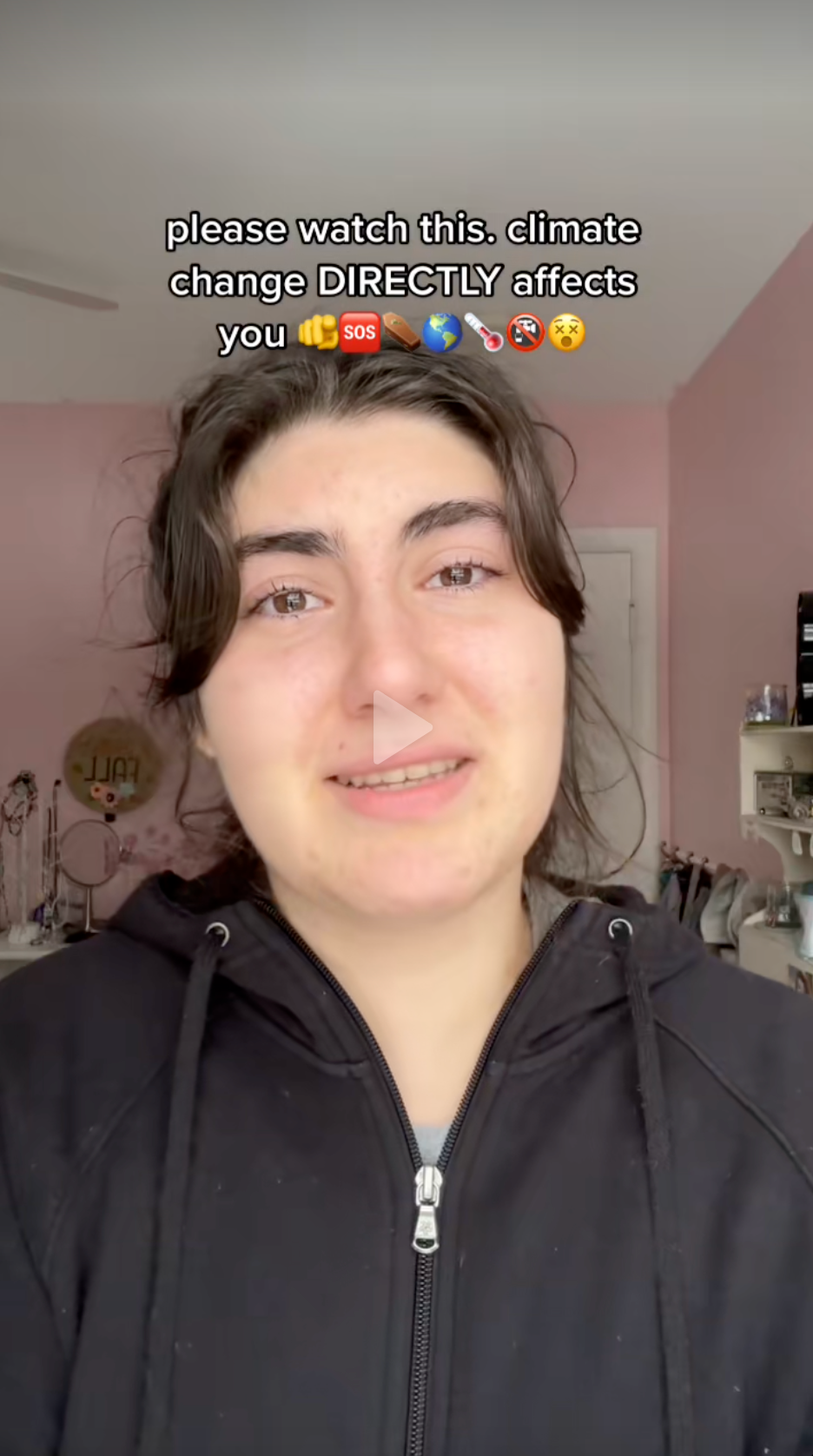
The climate crisis is unlike any challenge faced by previous generations. While the threat of nuclear winter during the Cold War offers some comparison, the factors influencing climate change are systemic. Young people are watching governments, corporations, and institutions actively contribute to the problem while other figures outright deny its existence.
Both Gen Z and Gen Alpha grew up during a time when it was common knowledge that human beings are the primary cause of climate change, that the last decade was the hottest in over 125,000 years, and that it could become too hot to live in many places around the globe by the end of the century.
It is a ticking time bomb, one that younger generations will live to see the consequences of. Hopelessness is a normal (initial) response to such a stark reality.
Research from GlobeScan found that Gen Z feels the emotional burden of climate change more heavily than any other age group. Nearly half of Gen Z respondents reported feeling greatly affected by climate change, while many experience frequent stress and anxiety surrounding it.
What is especially concerning is the growing sense of ecological futility. Many young people remain deeply concerned about environmental collapse but feel increasingly doubtful that individual action can meaningfully change outcomes. Of course, this isn’t true. But if you need a quick injection of hope, skip to the last section of this blog.
Economic pressure: Working hard for less

No matter where in Canada you live, the cost of living has skyrocketed since the Covid pandemic. This kind of economic insecurity impacts every aspect of our lives. Not only have wages not kept pace with inflation, but youth unemployment is at an all-time high while housing, groceries, education, and transportation costs continue to rise.
Many young people are working twice as hard to afford less than half of previous generations. They are entering adulthood during a period of extreme unaffordability, using “doom spending” as a way to cope with economic hopelessness through impulsive purchases and short-term gratification.
For many Gen Z workers, the notion that ‘hard work pays off’ has proven to be a fallacy. This has led to a rise in ‘quiet quitting’, a phenomenon characterized by no longer going ‘above and beyond’ at work, recognizing that working harder does not lead to better pay or more opportunities.
Social fragmentation

Despite being the most digitally connected generation in history, many young people report feeling profoundly isolated. The pandemic accelerated trends that were already emerging, including online communication replacing in-person interaction and convenience replacing community.
Research from Stanford University highlights that while Gen Z craves connection, they often default to isolation because modern life makes it easier to stay home. This is further compounded by a lack of third spaces, making access to physical space costly and inaccessible. Adding fuel to the fire, apps can now deliver entertainment, shopping, food, and even therapy without requiring meaningful human interaction.
Being chronically online also means being constantly exposed to crisis, outrage, and social comparison. There is little room to mentally recover when you are continuously confronted with images of instability, inequality, and curated success.
Is it hopelessness or awareness?
As philosopher Jiddu Krishnamurti once said: “It is no measure of health to be well adjusted to a profoundly sick society.”
The hopelessness that Gen Z and Gen Alpha feel about the future is a normal response to worsening social and economic conditions. A majority of the challenges that their generations face are not individual failings but systemic ones.
Young people are being told to remain optimistic while facing worsening affordability, ecological instability, and declining social trust. Their distress may not simply reflect pathology; it may reflect true awareness. Wildeschool Canada describes this as a growing ‘purpose gap’, where many young Canadians feel disconnected not only from opportunity, but from meaning itself.
Where agency still exists
Hopelessness grows when people feel powerless. Agency grows when people feel capable of affecting change. And the good news is that change is possible.
It is easy to look at what is happening on a global scale as too big to change. With so many interconnected issues happening on an international scale, the enormity of those problems feel insurmountable. But they’re not.
Real change happens in our small circles of influence. It starts as a free workshop, a community fridge in our neighbourhood, or volunteering at a local shelter. Start small, with purpose, and see where it takes you.
Whether it’s mutual aid networks, local organizing, volunteering, or embedding yourself in a local community, when we come together, we all have the potential to rebuild connection and purpose in a fragmented world. If we want to see change, we have to actively participate in creating it.
Community can feel inaccessible, but only because it requires discomfort, effort, and active participation; things that are so easy to opt out of in a convenient digital world. Fixing these problems starts with us confronting ourselves, one small action at a time.
While no individual can solve climate collapse or economic inequality alone, small actions can turn into connections that can build into a movement.
Conclusion
At See Different, we work with youth who feel the same anxiety and hopelessness that overwhelms so many Gen Z and Gen Alpha youth. But we also see the hope that is sparked among groups through deep connection, innovative thinking, and the passion to turn ideas into action. Sign up your school, group, or organization for our free workshops today: https://www.seedifferent.ca/register-for-the-program
Beneath the hopelessness, overwhelm, and exhaustion is a generation deeply invested in building a future that feels livable, meaningful, and humane. So instead of focusing on the fact that Gen Z is struggling, let’s question whether society is willing to change the conditions producing that struggle.


Comments