
Changemakers in action 2025: Youth projects reimagining inclusion across Canada

Updated: Dec 9, 2025
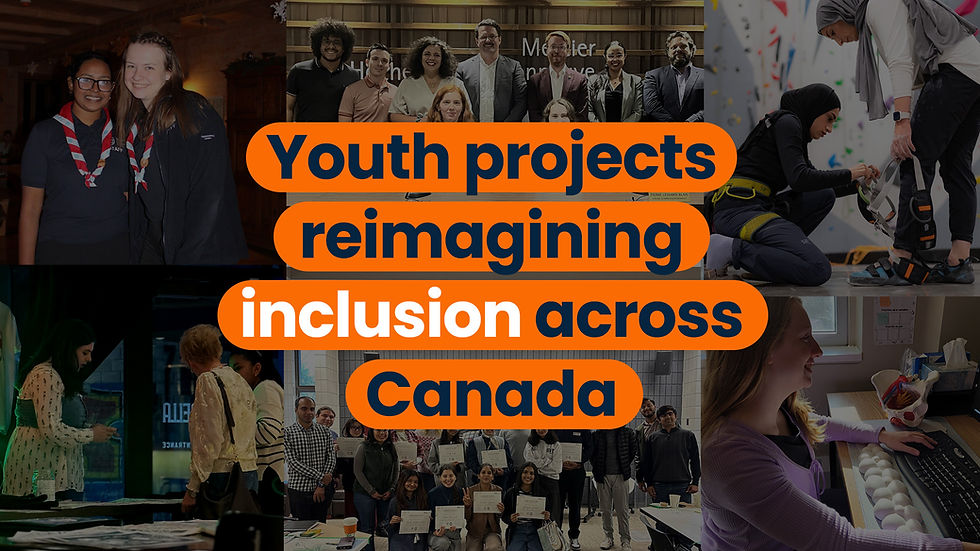
At See Different, we see every day that young people are not ‘future leaders’, they’re leading, right here, right now.
As the national youth education initiative of the Canadian Centre for Diversity and Inclusion (CCDI), we offer free training for youth ages 15–26 through two levels of certification:
Certificate 1: Principles of DEI – Building a shared language and foundation for diversity, equity, inclusion, accessibility, and reconciliACTION.
Certificate 2: Emerging Leaders of DEI – Diving deeper into DEIA through guided discussions grounded in lived experience, and preparing youth to design and lead real-world change.
Youth who complete both certificates can apply for one of our Changemaker Grants of up to $2,000 to bring their project ideas to life. These grants help young leaders turn lived experience, community care, and big ideas into concrete action.
In our first Changemaker Projects blog, we spotlighted some of the incredible projects completed in 2024, the first year of our Changemaker Grants. In part two, we turn the focus to our 2025 Changemakers, highlighting six new projects led by youth in Ontario, Saskatchewan, Québec, and Alberta. These incredible young people are reshaping systems, reclaiming space, and building cultures of belonging across Canada.
Wellness through expression:
A safe space for creative healing
Vanshita & Muhammad (Saskatchewan)

For Vanshita and Muhammad in Saskatchewan, creativity and mental health are deeply connected. Their Changemaker project invited students at their university into an evening where art, story, and community care came together.
Supported by the Changemaker Grant and their university’s Equity, Diversity, and Inclusion Office, the event began with:
A grounding land acknowledgement and opening, setting a tone of respect and connection.
A gentle mini art-therapy session led by a registered social worker and art therapist, encouraging participants to pause, breathe, and tune into themselves.
From there, students shared powerful forms of creative expression as coping and resistance, including:
Films and paintings exploring grief and loss
Classical Chinese and Indian dance offered as a form of therapy
Embroidery and other tactile art used to navigate disability, anxiety, and stress
Digital sketches, journaling, and poetry that gave shape to experiences often left unspoken
Presenters were recognized with certificates and honorariums, small but meaningful acknowledgements of their courage and labour.
The impact was profound. Participants described feeling seen, heard, and emotionally safe. Many were moved to tears, not out of despair, but from the relief of being in a space where mental health could be discussed openly, creatively, and without judgment.
This project demonstrated that creative expression is not ‘extra’, it is a form of healing, connection, and agency. Vanshita and Muhammad hope to continue creating spaces where students can show up as their full selves and explore mental health through culturally diverse and accessible practices.
Aspire 2 Heal: Standing with youth impacted by parental incarceration
Raine (Ontario)

In Canada, children and youth with an incarcerated parent are often invisible in data and overlooked in services. They may be navigating grief, stigma, financial strain, and unstable housing, all while trying to stay in school and plan for their futures.
Recognizing this gap based on her own experiences, Raine, based in Ontario, created Aspire 2 Heal, a scholarship and support program for youth ages 18–29 with an incarcerated parent who are pursuing health-related post-secondary programs.
Raine’s commitment and passion to this work runs deep. In addition to receiving a See Different Changemaker Grant, she also successfully applied for Frontlines’ Race to an Inclusive Canada micro-grant program and the Canadian Friendship Service Committee’s Transformative Justice Community Grant. Securing additional funding means that she will be able to take a more holistic approach and reach even more youth across Canada.
Through Aspire 2 Heal, Raine is:
Offering post-secondary scholarships to reduce financial barriers for eligible youth.
Providing access to financial literacy resources to support long-term stability.
Creating mental health and peer support spaces where youth can connect, share strategies, and be affirmed in their experiences.
Building community and professional networks through events and storytelling.
At its heart, Aspire 2 Heal is about more than funding. It’s about saying to young people who have experienced parental incarceration: You are seen. Your story matters. Your goals are valid.
By combining scholarships, mentorship, and community-building, and weaving together support from multiple grant programs, Raine is helping turn lived experience into leadership, and working toward a future where youth impacted by incarceration can thrive, not just survive.
If you are interested in applying for this grant, or know someone who is, visit Aspire2Heal’s website: https://deadtime.ca/pages/aspire2heal
Belonging in every badge: Fostering inclusion in Guiding across Canada
Shivoli (Saskatchewan)
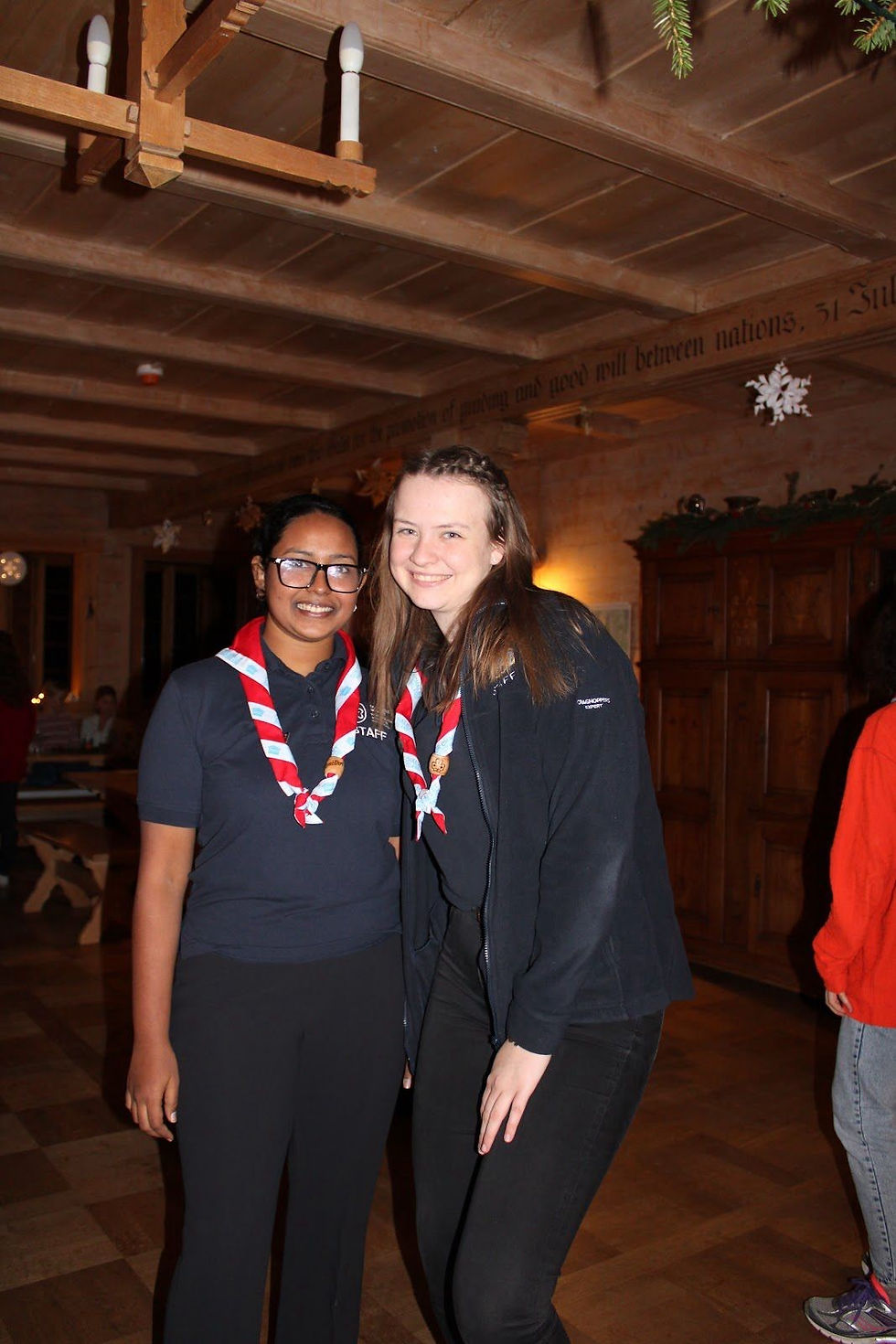
For Shivoli in Saskatchewan, Guiding has always been about more than badges. As a long-time Girl Guide, Ranger, Unit Leader, volunteer, and student ambassador, she’s seen firsthand how much confidence, courage, and leadership young people build in Guiding spaces.
But she’s also seen the flip side: the moments when someone doesn’t feel like they belong. When their identity, background, or experiences aren’t reflected, and an opportunity for growth is lost.
In 2025, Shivoli is launching a pilot project with the youth in her own Guide group. Working closely with her fellow guiders, she’s co-creating and testing interactive activities and conversations about diversity, equity, inclusion, and accessibility (DEIA). The goal is to make inclusion feel real and practical through:
Games, discussions, and creative projects that invite every girl to participate
Guided conversations about belonging, identity, and allyship within their unit
Reflection time so quieter voices have space to share what inclusion means to them
This first phase is intentionally small and relationship-based: starting with the group she knows best, learning alongside them, and listening carefully to what works (and what doesn’t) before scaling up.
From this pilot, Shivoli plans to refine the activities and begin shaping a future toolkit and badge proposal that could be shared with other units in coming years. Her longer-term vision is to see these ideas travel through Guiding networks across Canada, and eventually, she hopes, through the World Association of Girl Guides and Girl Scouts (WAGGGS).
For now, the work begins in one unit, one circle of girls, in Saskatchewan. But the hope is much bigger: that every girl in Guiding can feel seen, heard, and valued, and that future leaders carry inclusion with them wherever they go.
Inclusion in physical therapy: Creating accountable spaces for community change
Mélodie (Québec)

Mélodie, a physiotherapist and doctoral candidate in Québec at the Université de Montréal, focuses her research on pelvic floor care for transgender women undergoing vaginoplasty. In her work alongside 2SLGBTQIA+ communities, she has seen how unexamined assumptions, bias, and limited training can directly affect people’s access to safe, dignified care.
Her Changemaker project asks a critical question: What would it look like for physiotherapists themselves to take responsibility for learning and unlearning, together?
To answer that, Mélodie is partnering with the Global Health Division of the Canadian Physiotherapy Association to create accountable online spaces for physiotherapists across Canada to learn together. These sessions will:
Focus on unconscious bias, inclusive practice, and the real-world challenges physiotherapists encounter.
Be facilitated by people with deep DEI knowledge and lived experience, to ensure respectful dialogue and minimize harm.
Invite physiotherapists to name where they struggle, not to shame them, but to support more honest learning.
Key takeaways from each session will be transformed into practical resources and tools that can be shared more widely with physiotherapists across the country.
By starting with her own professional community, Mélodie is helping shift physiotherapy toward a model of care that is more informed, accountable, and responsive to the needs of trans and gender-diverse patients, and ultimately, to all those who experience barriers in the health system.
Rise together, Part Two: Creating space for Muslim and Arab Women in climbing
Baneen (Alberta)

When Baneen, a visibly Muslim and Arab climber from Alberta, started climbing regularly three years ago, she fell in love with the sport, but not always with how it felt to show up in those spaces.
As a Hijabi woman, she was often the only one who looked like her at the gym. The stares, questions, and sense of standing out made it harder to feel like she truly belonged, even as her skills and passion grew.
In 2024, as part of her involvement with See Different, Baneen piloted Rise Together, a climbing event for Muslim and Arab women, with funding support from Arc’teryx. That first gathering tested her idea: could a space designed specifically with Muslim and Arab women in mind make climbing feel more accessible, joyful, and safe? The answer was a clear yes. The pilot confirmed there was real demand for this kind of community and showed what was possible when intentional design meets the right support.
Building on that success, in 2025 Baneen received a See Different Changemaker Grant to enhance and scale up Rise Together. This year’s project:
Hosted a larger, dedicated climbing night for Muslim and Arab women, with even more intention around cultural safety and comfort.
Expanded outreach so that women who had never considered climbing, or who had felt out of place in gyms, could see themselves in the space.
Deepened collaboration with Arc’teryx and local gyms to model what inclusive, community-rooted recreation can look like in practice.
When she began planning the 2025 event, Baneen aimed for about 30 participants and worried that might be too ambitious. Instead, over 45 people registered, with more still hoping to attend even after registration closed, a powerful sign that the appetite for this kind of space is only growing.
Together, the 2024 pilot and 2025 scaled-up event tell a powerful story: with a bit of support and a lot of courage, one person’s vision can grow from a small, experimental gathering into a larger community movement.
Rise Together shows that Muslim and Arab women do belong in climbing, and that when we invest in youth-led ideas and design spaces with their identities in mind, entire communities gain new ways to move, connect, and thrive.
Making local democracy accessible: Documenters youth training in Montréal
Clément (Québec)
Municipal council meetings shape everything from public transit, to green spaces, to housing, but for many people, especially youth, those meetings can feel confusing, intimidating, or out of reach.

Clément, a recent journalism graduate based in Montréal and Network Lead for Documenters Canada, is working to change that. Documenters is a program that trains community members to attend public meetings, take detailed notes, and share what they learn with their communities, making local governance more transparent and accessible.
With support from the Changemaker Grant, Clément co-organized a youth-focused training in Eastern Montréal alongside:
Karim El Bikri, Coordinator at Solidarité Mercier-Est
Léa Beaulieu-Kratchanov, Journalist at Pivot
The training introduced participants to:
How local government works and where decisions get made
How to follow the agenda and decode the procedural language used in public meetings
Note-taking skills tailored for council sessions
Youth then put these skills into practice by attending a Mercier–Hochelaga-Maisonneuve borough council meeting for the first time. For participants who were already active at school, this experience offered a new way to engage with democracy at the neighbourhood level.
This pilot training lays the groundwork for future sessions with more young Montréalers, and shows that with the right tools and guidance, youth can play a powerful role in watching, understanding, and shaping local decision-making.
Learn more about Documenters Canada :
Website : https://documenters.cjconcordia.net/
Honouring youth leadership and Growing the National Youth Ambassadors Network
Across these six 2025 projects, young Changemakers in Ontario, Saskatchewan, Québec, and Alberta are:
Addressing systemic gaps in justice, education, health, recreation, and civic engagement.
Transforming their own lived experiences into community-based solutions.
Building spaces where more people can access support, share their stories, and belong.
At See Different, we’re honoured to walk alongside them, offering training, mentorship, and funding, and learning from their leadership every step of the way.
And the journey doesn’t end when a project wraps up. Youth who complete both of our certificates (Principles of DEI and Emerging Leaders of DEI) are invited to join our growing National Youth Ambassadors Network, even if they choose not to apply for a Changemaker Grant. Through this network, young people can:
Stay connected with peers across the country.
Hear about new opportunities for leadership, learning, and collaboration.
Help shape the future of See Different by sharing feedback and co-creating new ideas.
If you’re a young person with an idea to make your school or community more equitable and inclusive, here’s how you can get involved:
Start with our free DEI training: Build a strong foundation through our Principles of DEI and Emerging Leaders of DEI certificates.
Consider applying for a Changemaker Grant: Turn your idea into a project with real-world impact.
Join our National Youth Ambassadors Network: Connect with other youth who are challenging the status quo and reimagining what’s possible.
Young people are not just preparing to lead someday; you are leading right now! Your story, your questions, and your ideas belong in this work, and we’re here to help you turn them into action.


Comments